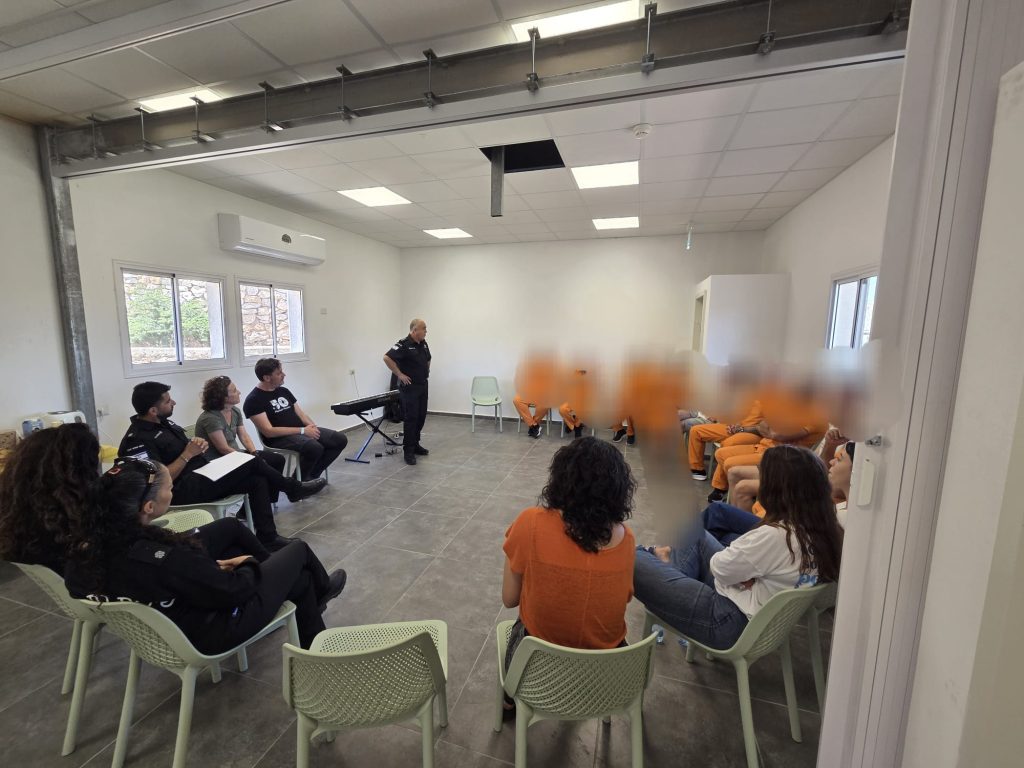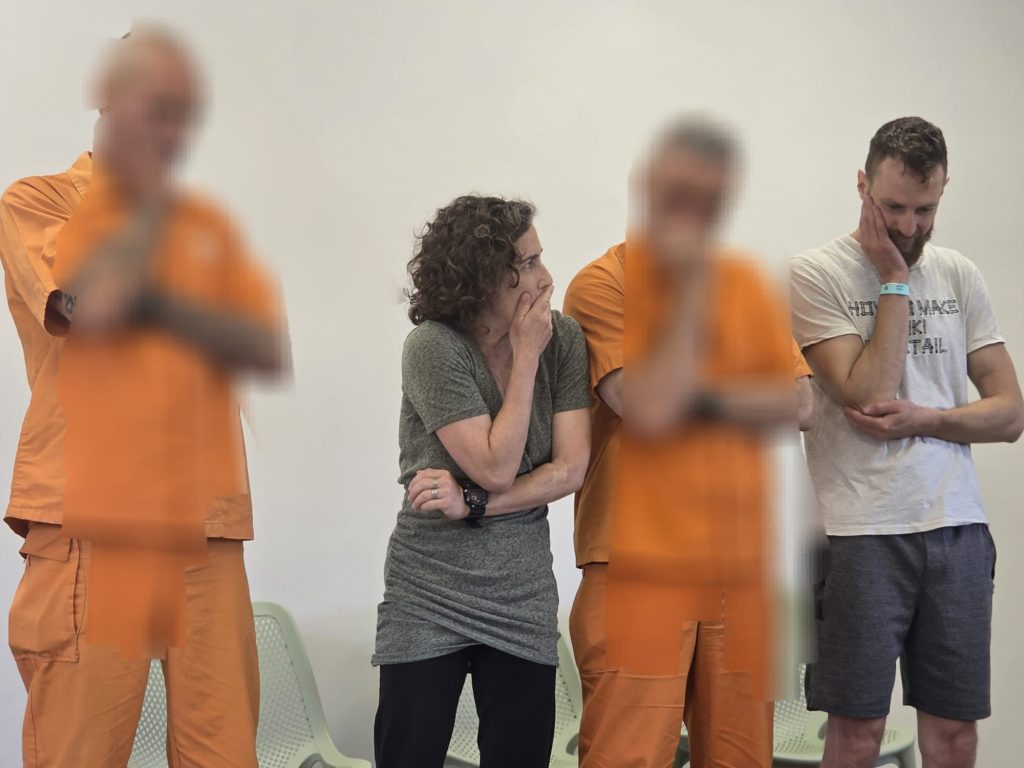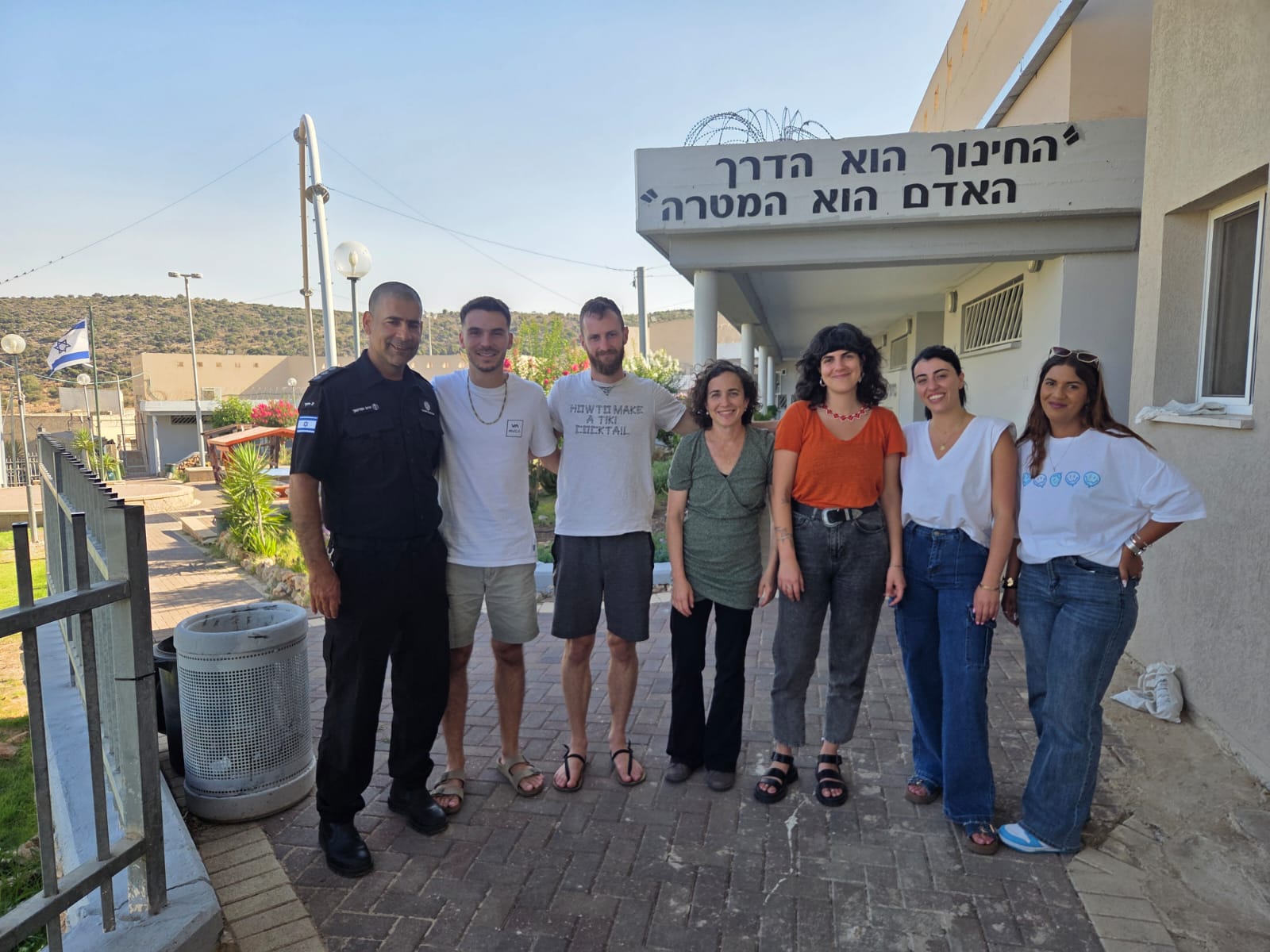
What happens when students and prisoners study together, in the same room, as one group? Ten students from the Ofakim program and the departments of Criminology and Theater, together with thirteen prisoners, studied together at Hermon Prison.
What we did
- They learned about incarceration, stigma and rehabilitation not only from books, but through a live encounter.
- They worked with playback theater, shared life stories, and explored together questions of identity, power, exclusion and rehabilitation.
- They gradually built relationships of reciprocity: at first the two groups sat facing each other, and by the end it felt like one group.
The course turned teaching into a living laboratory for examining exclusion, stigma and power relations. It did not erase the gap between a free person and an incarcerated one, but it opened a space in which the usual roles could be challenged: “normative” and “offender”, giver and receiver, the one who knows and the one who is studied.
From the field: One student wrote that at first the orange uniforms created a threatening image in his mind, but the moment a prisoner began to speak, “the image flipped in an instant.” Another student described how she received a smile, trust and a sense of shared humanity from the prisoners, and they thanked her for making them feel equal rather than inferior.
Photos